


Bas-relief
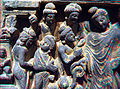
Bas-relief[1] is a type of relief (sculpture) that has less depth to the faces and figures than they actually have, when measured proportionately (to scale). This technique keeps the natural shapes of the figures and allows the work to be seen from many angles without twisting the figures themselves.
There is a continuation of the bas-relief technique into the next category, altorilievo, or high relief. High relief makes deeper images than bas-relief. Instead of shallow backgrounds that are a few inches (cm) deep at most, they can be up to several feet (a few meters) deep in altorilievo.
Some of the best examples of bas-relief are the Assyrian Lion Hunt Reliefs, which are housed at the British Museum. The attention to detail and appearance of the lions moving make them stand out, especially for the time period they were made in.
Images[change | change source]
These images are made to be seen in 3D with the use of colored glasses and might not appear correctly without them.
-
-
 Madonna and Child, less shallow relief
 -

-
 Assyrian Lion Hunt Reliefs are very shallow


.jpg)
