


Malacology

Malacology is the study of molluscs. These animals include snails, slugs, octopus, squid, and bivalves generally, such as clams and mussels. Most of them have shells. The shells are often collected for their beauty and interest. Many people eat molluscs, especially those people who live near the ocean.
Those scientists who study molluscs are called malacologists. They identify and classify them, and find out everything they can about their lives.
Types[change | change source]
Types of gastropods[change | change source]
The gastropods are the most common type of mollusc. They have about 70,000 described species.
- marine gastropod
- non-marine gastropod
- freshwater gastropod: with very few exceptions, the only freshwater molluscs are freshwater snails
- freshwater snail
- terrestrial gastropod: gastropods are the only group of molluscs which have some species living on land
- freshwater gastropod: with very few exceptions, the only freshwater molluscs are freshwater snails
Types of bivalves[change | change source]
With 20,000 described species, bivalves are the second commonest class of molluscs. There are several classifications of bivalves in use. This is a rough guide:
- Pteromorphia including the
- Heterodonta
- Soft-shelled clams
- Shipworms (Turedo)
- Hard-shelled clams, cockles and razor shells
Malacologists[change | change source]

- Horace Burrington Baker (1889–1991)[1]
- Henri Marie Ducrotay de Blainville (1777-1850)
- Jean Guillaume Bruguière (1749-1798)
- William J. Clench (1897-1984)[2]
- Georges Cuvier (1769-1832)[3]
- Gérard Paul Deshayes (1795-1875)
- John Edward Gray (1800-1875)[4]
- Otto Friedrich Müller (1730-1784)
- Alcide d'Orbigny (1802-1857)
- Isabel Pérez Farfante (1916-2009)[5][6][7]
- Constantine Samuel Rafinesque (1783-1840)[8]
- Lovell Augustus Reeve (1814-1865)[9]
- María Isabel Scott Hylton (1889-1990)[10]
- James Sowerby (1757–1822)
- George Brettingham Sowerby I (1788-1854)
- George Brettingham Sowerby II (1812-1884)
- George Brettingham Sowerby III (1843-1921)
- William John Swainson (1789-1855)
Museums[change | change source]
Museums that have either exceptional malacological research collections (behind the scenes) and/or exceptional public exhibits of molluscs:
- Academy of Natural Sciences of Philadelphia
- American Museum of Natural History
- Bailey-Matthews Shell Museum
- Cau del Cargol Shell Museum
- Museum of Comparative Zoology at Harvard
- Royal Belgian Institute of Natural Sciences, Brussels: with a collection of more than 9 million shells (mainly from the collection of Philippe Dautzenberg)
- Smithsonian Institution
Some mollusks[change | change source]
-
 sea snail
 -
 land slug
 -
 land snail
 -
 marine clam
 -
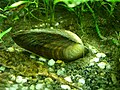 freshwater clam
 -
 octopus
 -
 squid
squid


References[change | change source]
- ↑ Horace Burrington Baker (1889–1971)
- ↑ "William J. Clench (1897-1984)". Archived from the original on 2011-10-08. Retrieved 2012-07-07.
- ↑ "Georges Cuvier (1769-1832)". Archived from the original on 2009-10-27. Retrieved 2012-07-07.
- ↑ "John Edward Gray (1800-1875)". Archived from the original on 2012-10-14. Retrieved 2012-07-07.
- ↑ History USNM
- ↑ "Isabel Pérez Farfante de Canet". Archived from the original on 2010-10-23. Retrieved 2012-07-07.
- ↑ Criales, María M. 2009. Obituario: Isabel Pérez-Farfante 24 de julio de 1916 – 20 de agosto de 2009. Ciencia y Mar. XIII(37):77-80.
- ↑ Constantine Samuel Rafinesque (1783-1840)
- ↑ Conchologica Iconica
- ↑ Ni solas ni resignadas: la participación femenina en las actividades científico-académicas de la Argentina en los inicios del siglo XX