


Great egret
| Great egret | |
|---|---|

| |
| Great egret | |
| Scientific classification | |
| Kingdom: | |
| Class: | |
| Order: | |
| Family: | |
| Genus: | |
| Binomial name | |
| Ardea alba | |
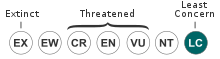
The great egret (Ardea alba) (also known an the common egret, large egret, great white egret, or great white heron) is a large wading bird found worldwide.

It is the second-largest member of the heron family in America (second only to the great blue heron). It lives in mudflats, tidal shallows marshes, lakes, rivers and flooded paddy fields. It winters in the south down to Colombia. The great egret flies with slow wing beats and has a deep, croaking call. It is 90-102 cm long.
Diet[change | change source]
The great egret eats fish, lizards, frogs, crayfish, small rodents, and insects. It often hunts in shallow water, usually impaling the prey on its long, sharp bill.
Egg and nests[change | change source]

The great egret's nest is a platform of twigs and sticks that is built in trees or on the ground. Females lay 3-5 pale blue-green eggs in each clutch (a set of eggs laid at one time). The incubation period of the eggs is 23–26 days.
References[change | change source]
Birds of the Indian Subcontinent-2010, Oxford University Press, Richard Grimmett, Carol Inskipp, Tim Inskipp