


Computer science

|
|
|

|
Computer science is the science of information. Computer scientists study different ways of reading, using, and encoding information.
There are many different areas within computer science. In some areas, scientists only work with ideas "on paper". In other areas they use those ideas to make things like computers and computer programs.
A person who works in computer science will often need to understand logic and mathematics.
Common tasks for a computer scientist[change | change source]
Asking questions[change | change source]
This is so people can find new and easier ways to do things, and the way to approach problems with this information.
While computers can do some things easily (like simple math, or sorting out a list of names from A-to-Z), computers cannot answer questions when there is not enough information, or when there is no real answer. Also, computers may take too much time to finish long tasks. For example, it may take too long to find the shortest way through all of the towns in the USA - so instead a computer will try to make a close guess. A computer will answer these simpler questions much faster.
Answering the question[change | change source]
Algorithms are a specific set of instructions or steps on how to complete a task. For example, a computer scientist wants to sort playing cards. There are many ways to sort them - by suits (diamonds, clubs, hearts, and spades) or by numbers (2, 3, 4, 5, 6, 7, 8, 9, 10, Jack, Queen, King, and Ace). By deciding on a set of steps to sort the cards, the scientist has created an algorithm. The scientist then needs to test whether this algorithm works. This shows how well and how fast the algorithm sorts cards.
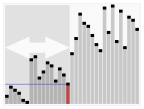
A simple but slow algorithm is: pick up two cards and check whether they are sorted correctly. If they are not, reverse them. Then do it again with another two, and repeat them all until they are all sorted. This is called a bubble sort. This method will work, but it will take a very long time.
A better algorithm is: find the first card with the smallest suit and smallest number (2 of diamonds), and place it at the start. After this, look for the second card, and so on. This algorithm is much faster, and does not need much space. This algorithm is called a "selection sort".
Ada Lovelace wrote the first computer algorithm in 1843, for a computer that was never finished. Computers began during World War II.[1] Computer science separated from the other sciences during the 1960s and 1970s. Now, computer science has its own methods, and has its own technical terms. It is related to electrical engineering, mathematics, and language science.
Computer science looks at the theoretical parts of computers. Computer engineering looks at the physical parts of computers (hardware). Software engineering looks at the use of computer programs and how to make them.
Parts of computer science[change | change source]
Central math[change | change source]
- Boolean algebra (when something can only be true or false)
- Computer numbering formats (how computers count)
- Discrete mathematics (math with numbers a person can count)
- Symbolic logic (clear ways of talking about math)
- Order of operations (which math operations are performed first)
How an ideal computer works[change | change source]
- Algorithmic information theory (how easily can a computer answer a question?)
- Complexity theory (how much time and memory does a computer need to answer a question?)
- Computability theory (can a computer do something?)
- Information theory (math that looks at data and how to process data)
- Theory of computation (how to answer questions on a computer using algorithms)
- Graph theory (math that looks for directions from one point to another)
- Type theory (what kinds of data should computers work with?)
- Denotational semantics (math for computer languages)
- Algorithms (looks at how to answer a question)
- Compilers (turning words into computer programs)
- Lexical analysis (how to turn words into data)
- Microprogramming (how to control the most important part of a computer)
- Operating systems (big computer programs, e.g. Linux, Microsoft Windows, Mac OS) to control the computer hardware and software.
- Cryptography (hiding data)
- Parallel computing (many instructions are carried out simultaneously)
- Theoretical computer science (how information can be processed)
Computer science at work[change | change source]
- Artificial intelligence (making computers learn and talk, similar to people)
- Computer architecture (building a computer)
- Computer graphics (making pictures with computers)
- Computer networks (joining computers to other computers)
- Computer program (how to tell a computer to do something)
- Computer programming (writing, or making, computer programs)
- Computer security (making computers and their data safe)
- Databases (a way to sort and keep data)
- Data structure (how to build or group data)
- Distributed computing (using more than one computer to solve a difficult problem)
- Information retrieval (getting data back from a computer)
- Programming languages (languages that a programmer uses to make computer programs)
- Program specification (what a program is supposed to do)
- Program verification (making sure a computer program does what it should do, see debugging)
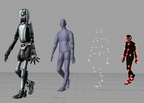
- Robots (using computers to control machines)
- Software engineering (how programmers write programs)
- Blockchain (use blockchain technology for security, and privacy)
What computer science does[change | change source]
- Benchmark (testing a computer's power or speed)
- Computer vision (how computers can see and understand images)
- Collision detection (how computers help robots move without hitting something)
- Data compression (making data smaller)
- Data structures (how computers group and sort data)
- Data acquisition (putting data into computers)
- Design patterns (answers to common software engineering problems)
- Digital signal processing (cleaning and "looking" at data)
- File formats (how a file is arranged)
- Human-computer interaction (how humans use computers)
- Information security (keeping data safe from other people)
- Internet (a large network that joins almost all computers)
- Web applications (computer programs on the Internet)
- Optimization (making computer programs work better)
- Software metrics (ways to measure computer programs, such as counting lines of code or number of operations)
- VLSI design (the making of a very large and complex computer system)
Related pages[change | change source]
References[change | change source]
- ↑ "A Brief History of Computer Science | World Science Festival". World Science Festival. Retrieved 2018-03-20.


|
Definitions from Wiktionary |

|
Media from Commons |

|
Quotations from Wikiquote |

|
Textbooks from Wikibooks |

|
Learning resources from Wikiversity |
