


United States Secretary of State
| United States Secretary of State | |
|---|---|
 Seal of the Secretary of State | |
 Flag of the Secretary of State | |
| United States Department of State | |
| Style | Mr./Madam Secretary (informal) The Honorable[1] (formal) His/Her Excellency[2] (diplomatic) |
| Member of | Cabinet National Security Council |
| Reports to | President of the United States |
| Seat | Washington, D.C. |
| Appointer | President of the United States with Senate advice and consent |
| Constituting instrument | 22 U.S.C. § 2651 |
| Precursor | Secretary of Foreign Affairs |
| Formation | July 27, 1789 |
| First holder | Thomas Jefferson |
| Succession | Fourth[3] |
| Deputy | Deputy Secretary of State |
| Salary | Executive Schedule, Level I[4] |
| Website | www.state.gov |
The United States Secretary of State (commonly abbreviated as SecState) is the head of the United States Department of State. This department deals with foreign affairs. The Secretary is a member of the President's Cabinet. This person is the highest-ranking cabinet secretary both in line of succession and order of precedence. The President chooses the person they want to be Secretary of the State. The United States Senate must agree with this choice for the person to become the Secretary of State.
The position of Secretary of State was created on April 6, 1789. Thomas Jefferson was the first Secretary. The Presidential order of succession lists the Secretary of State as the 4th person in line if something happens to the President.
Duties[change | change source]
The first duties of the Secretary of State included:
- Publication, distribution, and preservation of the laws of the United States
- Managing the commissions of people the President puts into office.
- Custody of the Great Seal of the United States
- Custody of the records of the former Secretary of the Continental Congress, except for those of the Treasury and War Departments
The following are the responsibilities of the Secretary of State. These were added to the duties over time.
- In control of the United States Department of State and the United States Foreign Service.
- Adviser to the President on matters dealing with other countries. This includes choosing diplomats to other nations and dealing with diplomats from other nations.
- Takes part in high-level negotiations with other countries. The Secretary deals with both single nations and international conferences or organizations. This includes the negotiation of international treaties.
- In control of the direction, coordination, and supervision of activities of the U.S. Government in other countries when more than one government department is involved.
- Support U.S. citizens living or traveling in other countries. This includes information, passports, visas and other services.
- Supervises the United States immigration policy in other countries.
- Communicates problems dealing with the United States foreign policy to Congress and to U.S. citizens.
List of Secretaries of State[change | change source]
Denotes acting Secretary of State
|
| No. | Secretary | State of residence | Senate confirmation vote | Took office | Left office | President(s) | |
|---|---|---|---|---|---|---|---|
| — | .jpg)
|
John Jay
Acting |
New York | September 15, 1789 | March 22, 1790 | George Washington (Unaffiliated) | |
| 1 | 
|
Thomas Jefferson | Virginia | March 22, 1790 | December 31, 1793 | ||
| 2 | 
|
Edmund Randolph | Virginia | January 2, 1794 | August 20, 1795 | ||
| 3 | 
|
Timothy Pickering | Pennsylvania[5] | August 20, 1795 | December 10, 1795[B] | ||
| December 10, 1795 | March 4, 1797 | ||||||
| March 4, 1797 | May 12, 1800 | John Adams (Federalist) | |||||
| — | 
|
Charles Lee[C] Acting |
Virginia | May 13, 1800 | June 5, 1800 | ||
| 4 | 
|
John Marshall | Virginia | June 13, 1800 | March 4, 1801 | ||
| — | 
|
Levi Lincoln Sr.[C] Acting |
Massachusetts | March 5, 1801 | May 1, 1801 | Thomas Jefferson (Democratic-Republican) | |
| 5 | 
|
James Madison | Virginia | May 2, 1801 | March 3, 1809 | ||
| 6 | 
|
Robert Smith | Maryland | March 6, 1809 | April 1, 1811 | James Madison (Democratic-Republican) | |
| 7 | 
|
James Monroe | Virginia | April 2, 1811 | March 3, 1817 | ||
| — | John Graham
Acting |
Kentucky | March 4, 1817 | March 9, 1817 | James Monroe (Democratic-Republican) | ||
| — | 
|
Richard Rush[C] Acting |
Pennsylvania | March 10, 1817 | September 22, 1817 | ||
| 8 | 
|
John Quincy Adams | Massachusetts | September 22, 1817 | March 3, 1825 | ||
| — | Daniel Brent Acting |
Virginia | March 4, 1825 | March 7, 1825 | John Quincy Adams (Democratic-Republican) | ||
| 9 | 
|
Henry Clay | Kentucky | March 7, 1825 | March 3, 1829 | ||
| — | James Alexander Hamilton Acting |
New York | March 4, 1829 | March 27, 1829 | Andrew Jackson (Democratic) | ||
| 10 | 
|
Martin Van Buren | New York | March 28, 1829 | May 23, 1831 | ||
| 11 | 
|
Edward Livingston | Louisiana | May 24, 1831 | May 29, 1833 | ||
| 12 | 
|
Louis McLane | Delaware | May 29, 1833 | June 30, 1834 | ||
| 13 | 
|
John Forsyth | Georgia | July 1, 1834 | March 4, 1837 | ||
| March 4, 1837 | March 3, 1841 | Martin Van Buren (Democratic) | |||||
| — | Jacob L. Martin Acting |
District of Columbia | March 4, 1841 | March 5, 1841 | William Harrison (Whig) | ||
| 14 | 
|
Daniel Webster | Massachusetts | March 6, 1841 | April 4, 1841 | ||
| April 4, 1841 | May 8, 1843 | John Tyler (Whig) | |||||
| — | 
|
Hugh S. Legaré Acting |
South Carolina | May 9, 1843 | June 20, 1843 | ||
| — | William S. Derrick Acting |
Pennsylvania | June 21, 1843 | June 23, 1843 | |||
| 15 | 
|
Abel P. Upshur | Virginia | June 24, 1843 | July 23, 1843[D] | ||
| July 24, 1843 | February 28, 1844 | ||||||
| — | 
|
John Nelson[C] Acting |
Maryland | February 29, 1844 | March 31, 1844 | ||
| 16 | 
|
John C. Calhoun | South Carolina | April 1, 1844 | March 10, 1845[E] | ||
| 17 | 
|
James Buchanan | Pennsylvania | March 10, 1845 | March 7, 1849[E] | James K. Polk[E] (Democratic) | |
| 18 | 
|
John M. Clayton | Delaware | March 8, 1849 | July 9, 1850 | Zachary Taylor (Whig) | |
| July 9, 1850 | July 22, 1850 | Millard Fillmore (Whig) | |||||
| 19 | 
|
Daniel Webster | Massachusetts | July 23, 1850 | October 24, 1852 | ||
| — | 
|
Charles M. Conrad[B] Acting |
Louisiana | October 25, 1852 | November 5, 1852 | ||
| 20 | 
|
Edward Everett | Massachusetts | November 6, 1852 | March 3, 1853 | ||
| — | .jpg)
|
William Hunter[F] Acting |
Rhode Island | March 4, 1853 | March 7, 1853 | Franklin Pierce (Democratic) | |
| 21 | 
|
William L. Marcy | New York | March 7, 1853 | March 6, 1857[E] | ||
| 22 | 
|
Lewis Cass | Michigan | March 6, 1857 | December 14, 1860 | James Buchanan (Democratic) | |
| — |
|
William Hunter[F] Acting |
Rhode Island | December 15, 1860 | December 16, 1860 | ||
| 23 | 
|
Jeremiah S. Black | Pennsylvania | December 17, 1860 | March 5, 1861[E] | ||
| 24 | 
|
William H. Seward | New York | March 5, 1861 | April 15, 1865 | Abraham Lincoln (Republican) | |
| April 15, 1865 | March 4, 1869 | Andrew Johnson (Democratic) | |||||
| 25 | 
|
Elihu B. Washburne | Illinois | March 5, 1869 | March 16, 1869 | Ulysses S. Grant (Republican) | |
| 26 | 
|
Hamilton Fish | New York | March 17, 1869 | March 4, 1877 | ||
| March 4, 1877 | March 12, 1877[E] | Rutherford B. Hayes[E] (Republican) | |||||
| 27 | 
|
William M. Evarts | New York | March 12, 1877 | March 7, 1881 | ||
| 28 | 
|
James G. Blaine | Maine | March 7, 1881 | September 19, 1881 | James A. Garfield (Republican) | |
| September 19, 1881 | December 19, 1881 | Chester A. Arthur (Republican) | |||||
| 29 | 
|
Frederick T. Frelinghuysen | New Jersey | December 19, 1881 | March 6, 1885[E] | ||
| 30 | 
|
Thomas F. Bayard | Delaware | March 7, 1885 | March 6, 1889 | Grover Cleveland[E] (Democratic) | |
| 31 | 
|
James G. Blaine | Maine | March 7, 1889 | June 4, 1892 | Benjamin Harrison (Republican) | |
| — | 
|
William F. Wharton[G] Acting |
Massachusetts | June 4, 1892 | June 29, 1892 | ||
| 32 | 
|
John W. Foster | Indiana | June 29, 1892 | February 23, 1893 | ||
| — |
|
William F. Wharton[G] Acting |
Massachusetts | February 24, 1893 | March 6, 1893 | ||
| Grover Cleveland (Democratic) | |||||||
| 33 | 
|
Walter Q. Gresham | Illinois[6] | March 7, 1893 | May 28, 1895 | ||
| – | 
|
Edwin F. Uhl[G] Acting |
Michigan | May 28, 1895 | June 9, 1895 | ||
| 34 | 
|
Richard Olney | Massachusetts | June 10, 1895 | March 5, 1897[E] | ||
| 35 | 
|
John Sherman | Ohio | March 6, 1897 | April 27, 1898 | William McKinley (Republican) | |
| 36 | 
|
William R. Day | Ohio | April 28, 1898 | September 16, 1898 | ||
| — | 
|
Alvey A. Adee[H] Acting |
New York | September 17, 1898 | September 29, 1898 | ||
| 37 | 
|
John Hay | District of Columbia | September 30, 1898 | September 14, 1901 | ||
| September 14, 1901 | July 1, 1905 | Theodore Roosevelt (Republican) | |||||
| — | .gif)
|
Francis B. Loomis[G] Acting |
Ohio | July 1, 1905 | July 18, 1905 | ||
| 38 | 
|
Elihu Root | New York | July 19, 1905 | January 27, 1909 | ||
| 39 | 
|
Robert Bacon | New York | January 27, 1909 | March 5, 1909[E] | ||
| 40 | 
|
Philander C. Knox | Pennsylvania | March 6, 1909 | March 5, 1913 | William Howard Taft[E] (Republican) | |
| 41 | 
|
William Jennings Bryan | Nebraska | March 5, 1913 | June 9, 1915 | Woodrow Wilson (Democratic) | |
| 42 | 
|
Robert Lansing | New York | June 9, 1915 | June 23, 1915 | ||
| June 24, 1915 | February 13, 1920 | ||||||
| — | 
|
Frank Polk[I] Acting |
New York | February 14, 1920 | March 12, 1920 | ||
| 43 | 
|
Bainbridge Colby | New York | March 23, 1920 | March 4, 1921 | ||
| 44 | 
|
Charles Evans Hughes | New York | March 5, 1921 | August 2, 1923 | Warren G. Harding (Republican) | |
| August 2, 1923 | March 4, 1925 | Calvin Coolidge (Republican) | |||||
| 45 | 
|
Frank B. Kellogg | Minnesota | March 5, 1925 | March 4, 1929 | ||
| March 4, 1929 | March 28, 1929 | Herbert Hoover (Republican) | |||||
| 46 | 
|
Henry L. Stimson | New York | March 28, 1929 | March 4, 1933 | ||
| 47 | 
|
Cordell Hull | Tennessee | March 4, 1933 | November 30, 1944 | Franklin D. Roosevelt (Democratic) | |
| 48 | 
|
Edward Stettinius Jr. | Virginia | December 1, 1944 | April 12, 1945 | ||
| April 12, 1945 | June 27, 1945 | Harry S. Truman (Democratic) | |||||
| — | 
|
Joseph Grew[I] Acting |
New Hampshire | June 28, 1945 | July 3, 1945 | ||
| 49 | 
|
James F. Byrnes | South Carolina | July 3, 1945 | January 21, 1947 | ||
| 50 | 
|
George Marshall | Pennsylvania | January 21, 1947 | January 20, 1949 | ||
| 51 | 
|
Dean Acheson | Maryland[7] | January 21, 1949 | January 20, 1953 | ||
| — | 
|
H. Freeman Matthews[I] Acting |
Maryland | January 20, 1953 | January 21, 1953 | Dwight D. Eisenhower (Republican) | |
| 52 | .jpg)
|
John Foster Dulles | New York | January 21, 1953 | April 22, 1959 | ||
| 53 | .jpg)
|
Christian Herter | Massachusetts | April 22, 1959 | January 20, 1961 | ||
| — | 
|
Livingston T. Merchant Acting |
District of Columbia | January 20, 1961 | January 21, 1961 | John F. Kennedy (Democratic) | |
| 54 | 
|
Dean Rusk | New York[8] | January 21, 1961 | November 22, 1963 | ||
| November 22, 1963 | January 20, 1969 | Lyndon B. Johnson (Democratic) | |||||
| — | 
|
Charles E. Bohlen Acting |
District of Columbia | January 20, 1969 | January 22, 1969 | Richard Nixon (Republican) | |
| 55 | 
|
William P. Rogers | Maryland | January 22, 1969 | September 3, 1973 | ||
| — | 
|
Kenneth Rush Acting |
Florida | September 3, 1973 | September 22, 1973 | ||
| 56 | 
|
Henry Kissinger | District of Columbia | 78-7 | September 22, 1973 | August 9, 1974 | |
| August 9, 1974 | January 20, 1977[9] | Gerald Ford (Republican) | |||||
| — | 
|
Philip Habib Acting |
California | January 20, 1977 | January 23, 1977 | Jimmy Carter (Democratic) | |
| 57 | 
|
Cyrus Vance | New York[10] | Voice Vote | January 23, 1977 | April 28, 1980[11] | |
| — | 
|
Warren Christopher[K][12] Acting |
California | April 28, 1980 | May 2, 1980 | ||
| — | 
|
David D. Newsom[L][12] Acting |
May 2, 1980 | May 3, 1980 | |||
| — | May 3, 1980 | May 3, 1980 | |||||
| — |
|
David D. Newsom[L][12] Acting |
May 3, 1980 | May 4, 1980 | |||
| — |
|
Warren Christopher[K][12] Acting |
California | May 4, 1980 | May 8, 1980 | ||
| 58 | 
|
Edmund Muskie | Maine | 94-2 | May 8, 1980 | January 20, 1981[13] | |
| 59 | 
|
Alexander Haig | Connecticut | 93-6 | January 22, 1981 | July 5, 1982[14] | Ronald Reagan (Republican) |
| — | 
|
Walter J. Stoessel Jr.[K] Acting |
California | July 5, 1982 | July 16, 1982 | ||
| 60 | 
|
George Shultz | California | 97-0 | July 16, 1982 | January 20, 1989[15] | |
| — | 
|
Michael Armacost[L] Acting |
Maryland | January 20, 1989 | January 25, 1989 | George H. W. Bush (Republican) | |
| 61 | .jpg)
|
James Baker | Texas | 99-0 | January 25, 1989 | August 23, 1992[16] | |
| 62 | 
|
Lawrence Eagleburger | Florida[17] | August 23, 1992 | December 8, 1992[K][18] | ||
| Recess Appointment | December 8, 1992 | January 19, 1993[19] | |||||
| — | Arnold Kanter[L][20] Acting |
Virginia | January 20, 1993 | Bill Clinton (Democratic) | |||
| — | 
|
Frank G. Wisner[N][20] Acting |
District of Columbia | January 20, 1993 | |||
| 63 | 
|
Warren Christopher | California | Voice Vote | January 20, 1993 | January 17, 1997[21] | |
| 64 | 
|
Madeleine Albright | District of Columbia | 99-0 | January 23, 1997 | January 20, 2001[22] | |
| 65 | 
|
Colin Powell | Virginia | Voice Vote | January 20, 2001 | January 26, 2005[23] | George W. Bush (Republican) |
| 66 | 
|
Condoleezza Rice | California | 85-13 | January 26, 2005 | January 20, 2009[24] | |
| — | _Official_portrait_of_William_Burns,_U.S._Ambassador-designate_to_Russia_(Photographer-_Ann_Thomas--State)_(59-CF-DS-22432-05_Amb_BillBurns0086_fromPSD_-_DPLA_-_24e3adb7aadd75ad1930cff23ef02645.jpg)
|
William Joseph Burns[L] Acting |
District of Columbia | January 20, 2009 | January 21, 2009[25] | Barack Obama (Democratic) | |
| 67 | 
|
Hillary Clinton | New York | 94-2 | January 21, 2009 | February 1, 2013[26] | |
| 68 | 
|
John Kerry | Massachusetts | 94-3 | February 1, 2013 | January 20, 2017[27] | |
| — | 
|
Tom Shannon[L] Acting |
Minnesota | January 20, 2017 | February 1, 2017[28][29][30] | Donald Trump (Republican) | |
| 69 | 
|
Rex Tillerson | Texas | 55-43 | February 1, 2017 | March 31, 2018 | |
| — | 
|
John J. Sullivan[K] Acting |
Massachusetts | April 1, 2018 | April 26, 2018 | ||
| 70 | 
|
Mike Pompeo | Kansas | 57-42 | April 26, 2018 | January 20, 2021 | |
| — | 
|
Daniel Bennett Smith
Acting |
Virginia | January 20, 2021 | January 26, 2021 | Joe Biden (Democratic) | |
| 71 | 
|
Antony Blinken | New York | 78-22 | January 26, 2021 | ||
Living former secretaries of state[change | change source]
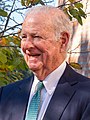
As of April 2024, there are seven living former secretaries of state, the oldest being James Baker (served 1989–1992). The most recent death of a former secretary of state was that of Henry Kissinger (served 1973–1977) on November 29, 2023. The living former secretaries of state, in order of service, are:
- Living former secretaries of state
-
-

-

-

-

-


.jpg)
_(1).jpg)
_(cropped).jpg)

References[change | change source]
- ↑ https://www.state.gov/protocol-reference/
- ↑ "Archived copy" (PDF). Archived from the original (PDF) on 2020-09-14. Retrieved 2021-01-21.
{{cite web}}: CS1 maint: archived copy as title (link) - ↑ "3 U.S. Code § 19 - Vacancy in offices of both President and Vice President; officers eligible to act". Cornell Law School.
- ↑ 5 U.S.C. § 5312.
- ↑ Biographies of the Secretaries of State: Timothy Pickering
- ↑ Biographies of the Secretaries of State: Walter Quintin Gresham
- ↑ Biographies of the Secretaries of State: Dean Gooderham Acheson
- ↑ Biographies of the Secretaries of State: David Dean Rusk
- ↑ "Biographies of the Secretaries of State: Henry A. (Heinz Alfred) Kissinger (1923–)". U.S. Department of State – Office of the Historian.
- ↑ Biographies of the Secretaries of State: Cyrus Roberts Vance
- ↑ "Biographies of the Secretaries of State: Cyrus Roberts Vance (1917–2002)". U.S. Department of State – Office of the Historian.
- ↑ 12.0 12.1 12.2 12.3 Allexperts.com – Secretary of State Archived 2012-09-27 at the Wayback Machine
- ↑ "Biographies of the Secretaries of State: Edmund Sixtus Muskie (1914–1996)". U.S. Department of State – Office of the Historian.
- ↑ "Biographies of the Secretaries of State: Alexander Meigs Haig Jr. (1924–2010)". U.S. Department of State – Office of the Historian.
- ↑ "Biographies of the Secretaries of State: George Pratt Shultz (1920–)". U.S. Department of State – Office of the Historian.
- ↑ "Biographies of the Secretaries of State: James Addison Baker III (1930–)". U.S. Department of State – Office of the Historian.
- ↑ Biographies of the Secretaries of State: Lawrence Sidney Eagleburger
- ↑ "Biographies of the Secretaries of State: Lawrence Sidney Eagleburger (1930–2011)". U.S. Department of State – Office of the Historian.
Served as Acting Secretary of State, Aug 23 – Dec 8, 1992.
- ↑ "Biographies of the Secretaries of State: Lawrence Sidney Eagleburger (1930–2011)". U.S. Department of State – Office of the Historian.
- ↑ 20.0 20.1 and, Thomas L. Friedman (20 January 1993). "Clinton Rounds Out State Dept. Team". The New York Times. Retrieved 14 March 2018.
- ↑ "Biographies of the Secretaries of State: Warren Minor Christopher (1925–2011)". U.S. Department of State – Office of the Historian.
- ↑ "Biographies of the Secretaries of State: Madeleine Korbel Albright (1937–)". U.S. Department of State – Office of the Historian.
- ↑ "Biographies of the Secretaries of State: Colin Luther Powell (1937–)". U.S. Department of State – Office of the Historian.
- ↑ "Biographies of the Secretaries of State: Condoleezza Rice (1954–)". U.S. Department of State – Office of the Historian.
- ↑ "Biographies of the Secretaries of State: Condoleezza Rice (1954–)". U.S. Department of State – Office of the Historian.
Under Secretary for Political Affairs William J. Burns served as Acting Secretary of State, January 20–21, 2009.
- ↑ "Biographies of the Secretaries of State: Hillary Rodham Clinton (1947–)". U.S. Department of State – Office of the Historian.
- ↑ "John Forbes Kerry (1943–)". U.S. Department of State – Office of the Historian.
- ↑ Herman, Steve. "Career Diplomat Becomes Acting Secretary of State with Trump Inauguration". voanews.com. Retrieved 14 March 2018.
- ↑ News, ABC. "ABC News". ABC News. Retrieved 14 March 2018.
{{cite web}}:|last=has generic name (help) - ↑ "Under Secretary of State Shannon meets Tillerson: U.S. official". Reuters. 19 January 2017. Retrieved 14 March 2018.
 This short article about the United States can be made longer. You can help Wikipedia by adding to it.